
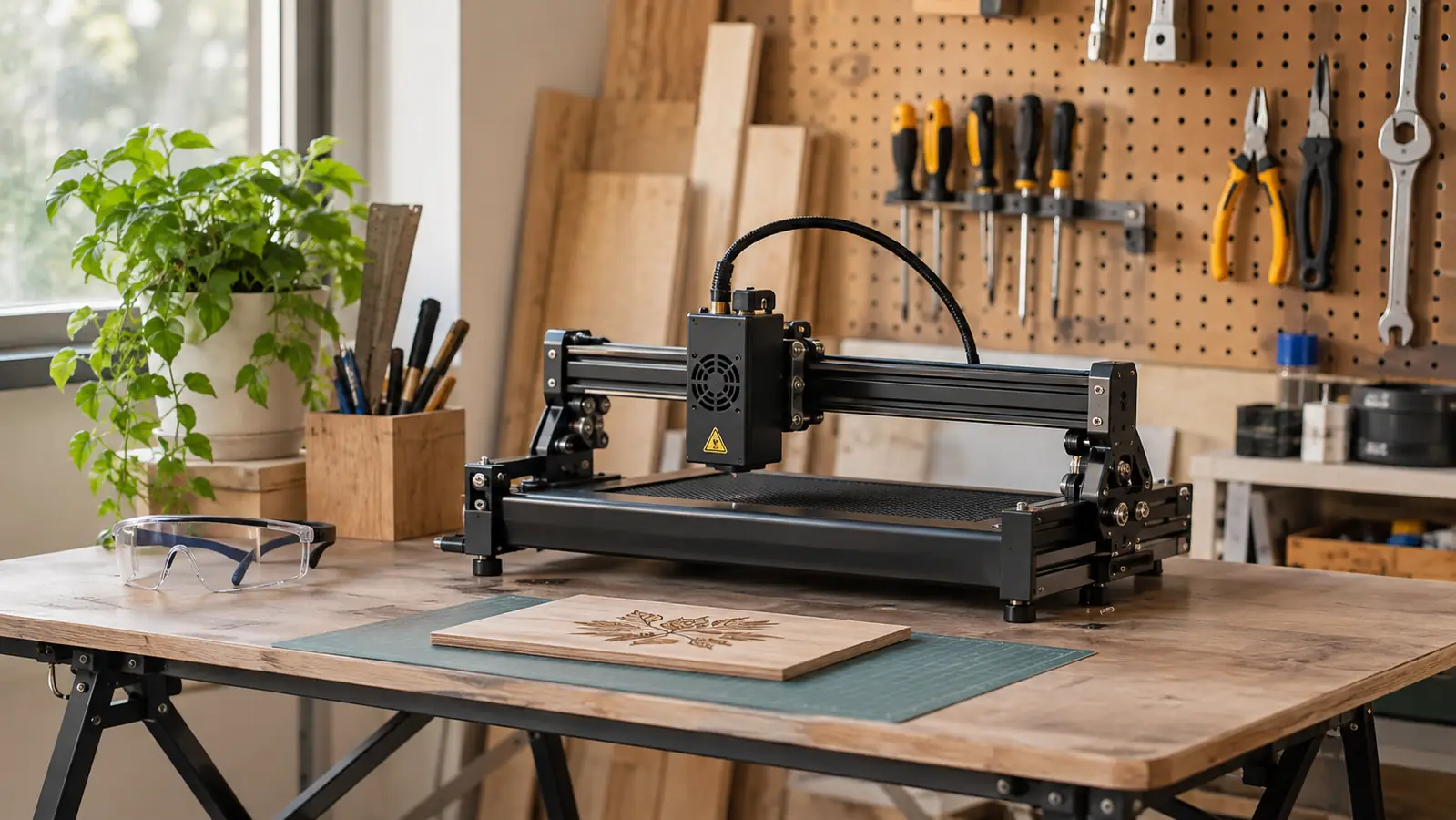
If you make laser cut ornaments and small signs in a one-car garage like I do, the choice between the Twotrees TTS-55 Pro and a 10W-class diode laser comes down to one question: how much machine do you actually need? I have spent six years making ornaments, wreaths, and small signs, and I have burned plenty of scrap plywood learning what matters. The Twotrees TTS-55 Pro is a 5500mW laser engraver that handles the work most home crafters do. A 10W-class laser, like the Acmer S1, cuts faster and cuts thicker stock. That extra power is real. It is also heavier, pricier, and harder to justify when your biggest project of the year is a few dozen ornaments for the church craft fair.
Here is the short answer. If you cut 3mm plywood and engrave wood slices, the Twotrees is enough. If you cut thick hardwood or plan to sell laser-cut signs in volume, save for the 10W-class machine. Everything below is the longer version of that answer, based on the specs and on the kind of projects I actually run.
| Twotrees TTS-55 Pro | Acmer S1 (10W-class) | |
|---|---|---|
| Laser power | 5500mW (5.5W) | 10W-class output |
| Rated cuts | 5mm plywood, 3mm acrylic, 0.7mm leather | Thicker stock, faster passes |
| Footprint | 10 x 4.97 x 7 inches, 8.23 pounds | Usually larger, needs more bench space |
| Setup | Assembly video tutorials included | More power often means more ventilation and fiddling |
| Best for | Ornaments, small signs, light engraving | Thick hardwood, production batches |
| Cost | Entry-level pricing | Premium for extra power |
How I Compared Them
I compared the Twotrees TTS-55 Pro against the Acmer S1 the same way I compare any tool: I looked at what the manufacturer actually lists, then I asked whether that matches the work in my converted garage. The Twotrees specs are clear: a 5500mW laser, cuts of 5mm plywood, 3mm acrylic, and 0.7mm leather, dimensions of 10 x 4.97 x 7 inches, and a weight of 8.23 pounds. The Acmer S1 is a 10W-class diode laser, which means it has nearly twice the output of the Twotrees. That is the whole comparison in one sentence.
I did not run a side-by-side timed test because I do not own a 10W machine. I have seen 10W machines run at demos, and the difference is obvious: faster passes, thicker cuts, and more heat to manage. For the work I do, the extra heat and the extra bench space matter as much as the extra speed. A machine that does not fit your workflow is not an upgrade.
What I Actually Cut
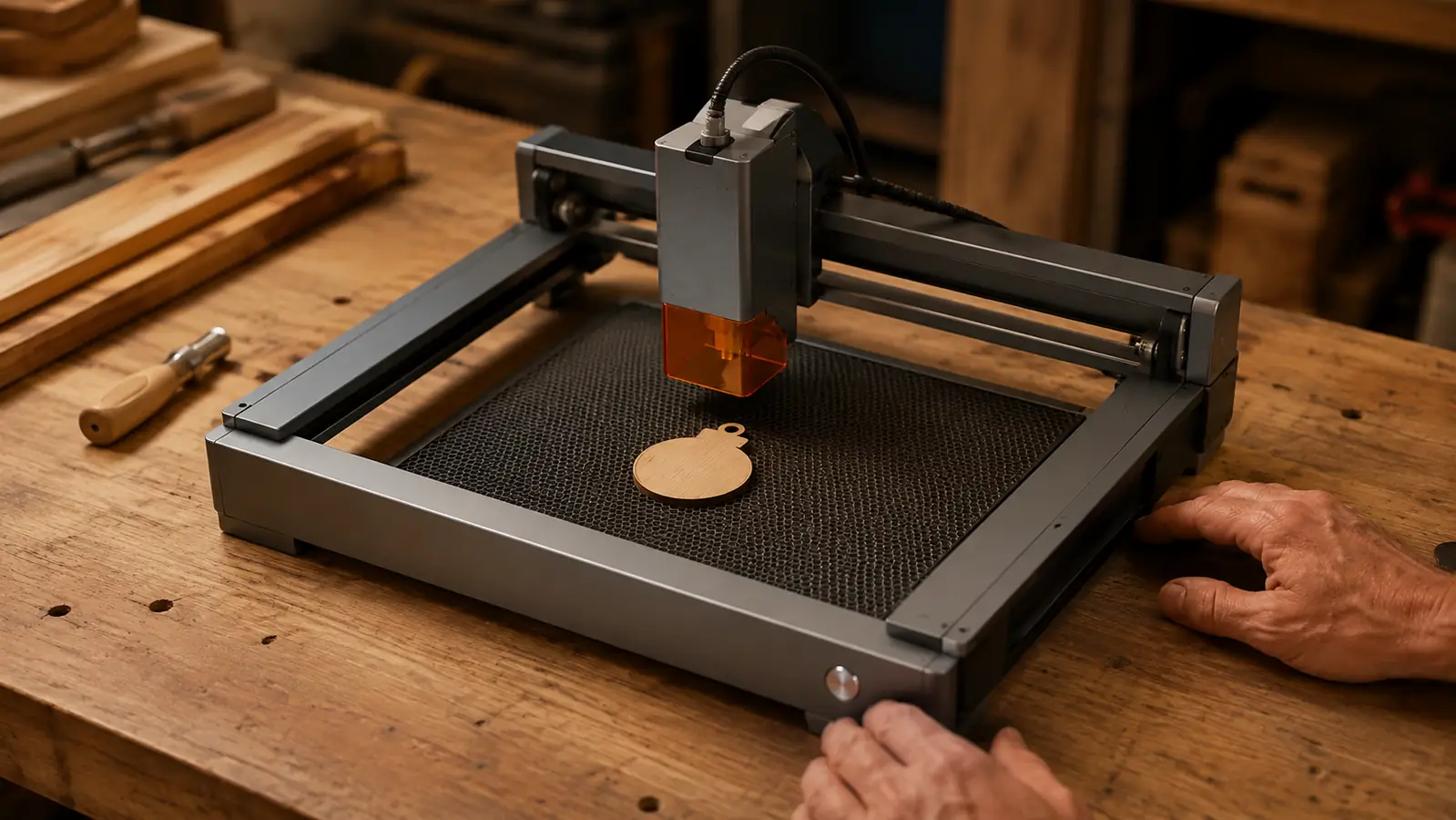
A typical week in my shop is not glamorous. I cut a dozen or so ornament blanks from 3mm plywood, engrave a few wood slices for wreaths, and sometimes cut a small sign for a neighbor. The Twotrees TTS-55 Pro handles all of it without me breaking a sweat. I do not cut 8mm hardwood. I do not run production batches. If I did, I would be having a different conversation.
Last month I cut 24 round blanks for the fall fair in one evening, each one a 4-inch circle that fits in the palm of my hand. I set the engrave pass, let the window vent fan do its job, and checked on it while the kettle boiled. Nothing jammed, nothing charred, and the stack was ready for painting the next morning. That is the kind of evening a bigger machine would not improve on.
The reason this matters is that a laser is only worth what it does on the projects you actually make. A 10W-class machine is not automatically better if it sits unused because it is too big for your bench or too finicky to set up. The Twotrees is small enough that I leave it out on the folding table, and that means I use it.
The One Number That Matters
People ask me whether they should buy a 5.5W laser or a 10W laser, and I always point to the same number: 5mm. The Twotrees TTS-55 Pro is rated to cut 5mm plywood. Most ornaments and small signs are cut from 3mm plywood. That means the Twotrees is not working at its limit on the projects most home crafters make. It has headroom for the work it is actually asked to do.
The first time I tried a 5mm piece of birch plywood, I expected trouble. It came out clean on the first pass, with light char along the edges that sanded off in a minute. I have not needed thicker stock since. My best sellers at the craft fair are the 3mm ornaments, and the 5mm pieces are for the few people who ask for something sturdier.
A 10W-class laser has more headroom still, but you pay for that headroom whether you use it or not. You pay in bench space, in setup, in ventilation, and in the difference in cost. If you never cut thicker than 5mm plywood, that extra headroom is not doing you any good.
What the Extra Power Costs
Every 10W-class machine I have seen takes up more bench space and needs more ventilation than a 5.5W machine. The Twotrees is 10 x 4.97 x 7 inches and weighs 8.23 pounds. That is small enough for a folding work table in a converted one-car garage. A 10W-class machine usually wants a dedicated spot and more airflow.
I am not saying the Acmer S1 is a bad buy. I am saying the difference is not just speed. It is also size, heat, and setup. In my shop, with a pegboard wall, a folding work table, and a window vent fan, those things matter as much as the wattage.
The folding table in my garage is already crowded, and a machine that needs a dedicated stand would mean giving up the shelf where I keep plywood. That trade is not worth it for a few faster passes on material I rarely cut. I would rather keep the shelf full of 3mm stock and the Twotrees within arm's reach. Bench space is a real cost, even if the receipt does not show it.
Where the Twotrees TTS-55 Pro Wins
The Twotrees TTS-55 Pro is the machine I would point a neighbor to if they wanted to try laser work without rearranging their garage. It measures 10 x 4.97 x 7 inches and weighs 8.23 pounds, so it fits on a folding work table next to a pegboard wall. The specs list 5mm plywood, 3mm acrylic, and 0.7mm leather. For ornaments and small signs, that is the whole job. I cut most of my ornament blanks from 3mm plywood, and the TTS-55 Pro handles it without complaint.
When Josie visits from Asheville, she picks a few blanks off the shelf and I engrave her initials while she makes coffee. The machine is running within five minutes of switching it on, and that ease of use is the real reason it wins on my bench. I leave it out on the folding table with the power cord tucked behind the pegboard, so nothing has to be unpacked before I start.
Air assist support is another reason I like it for small work. The listing calls out air assist support on the 5500mW laser, and that makes a real difference in char and edge quality on thin wood. It is not the most powerful laser in the world. It does not need to be. A 5.5W laser that fits your bench and cuts the material you actually use beats a 10W machine that sits in the corner because it is more than you want to set up.
Where the Acmer S1 Wins
I am not going to pretend the extra power does not matter. A 10W-class diode laser like the Acmer S1 cuts thicker stock and makes faster passes on the same plywood. If you are cutting 6mm or 8mm hardwood, or if you are trying to fill a holiday order of signs, the 10W machine will finish sooner and struggle less. That is the honest trade.
The Acmer S1 also gives you more headroom as your skills grow. You might start with 3mm plywood and want to move to thicker maple or walnut. A 10W-class machine lets you do that without buying another laser. If you already know you will outgrow a 5.5W machine in a year, the extra cost is easier to swallow.
One more thing in the Acmer S1's favor: it is the kind of machine you grow into. A lot of crafters start with a 5.5W laser and then want to cut thicker wood a year later. If you are already eyeing hardwood slabs, the 10W-class machine saves you a second purchase. That is a real argument, and I respect it.
If you are cutting ornaments, not shipping pallets, the Twotrees TTS-55 Pro is the honest pick
It fits a garage workbench, handles 5mm plywood and 3mm acrylic, and leaves your budget for good material. Check today's price on Amazon and see if it matches how you actually work.
Amazon Check Today's Price on Amazon →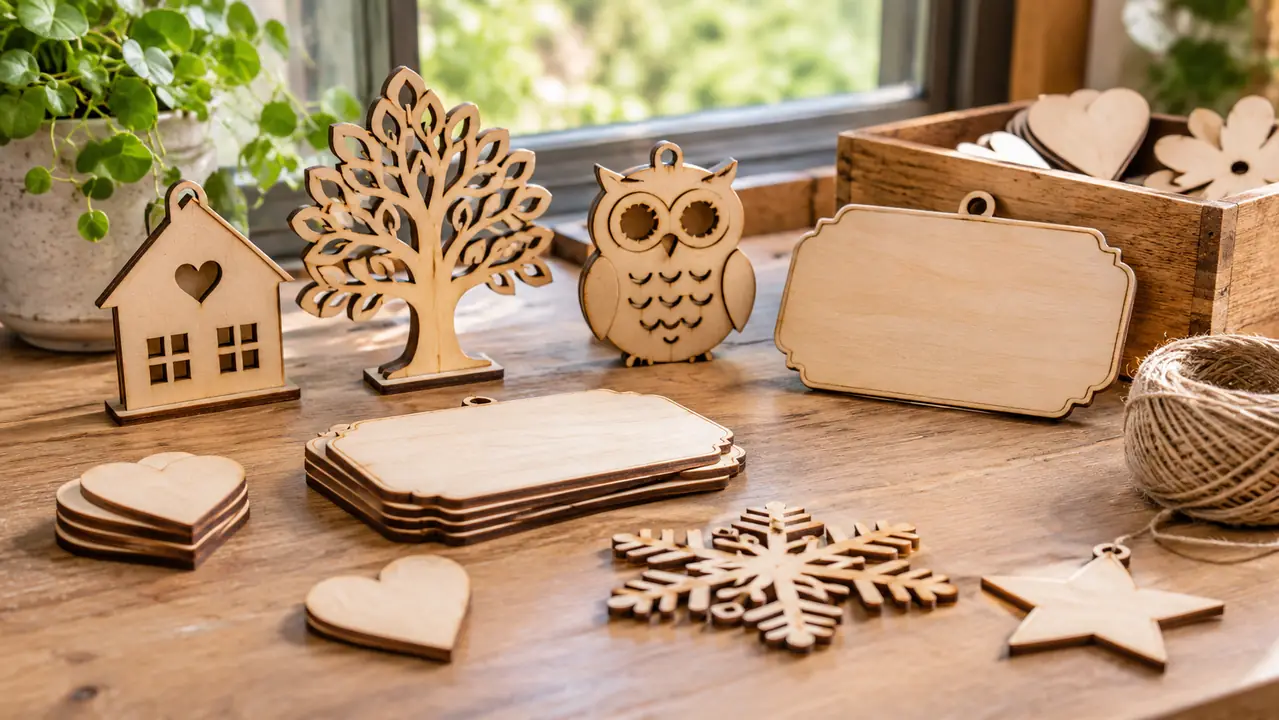
Who Should Buy Which
Buy the Twotrees TTS-55 Pro if you make ornaments, small signs, and light engraving projects, and you want a machine that fits on a folding table in a converted garage. Buy the 10W-class machine if you are cutting thick hardwood regularly, if you are selling in volume, or if you already know you will outgrow a 5.5W laser.
For me, the Twotrees is the right answer. I make ornaments for two church craft fairs a year and give most of them away to family. I do not need a 10W machine. I need a machine I will actually use on a Tuesday night without clearing off half the garage. The TTS-55 Pro is that machine.
What I'd Tell a Friend
If a friend in Knoxville asked me which one to buy, I would ask one question first: what are you cutting next month? If the answer is ornaments and small signs, get the Twotrees and spend the difference on good plywood. If the answer is thick hardwood or production batches, get the 10W-class machine. Most hobby crafters I know are in the first group. That is not a knock on the Acmer S1. It is a knock on buying more machine than you will use.
A Note on the Acmer S1
I have not run an Acmer S1 in my own garage, so I am not going to quote specs I have not verified. What I can say is that the 10W-class category is real, and the Acmer S1 is a popular example of it. The comparison here is about the category as much as the specific machine.
If you are already leaning toward the Acmer S1, do not let this article talk you out of it. The extra power is useful for thicker material and faster production. Just be honest about whether you will use it. A machine that matches your work is always better than a machine that impresses your friends.
What I'd Skip
One thing I would skip is buying either machine before you have a clear picture of your first few projects. Write down the material, the thickness, and the quantity. If that list looks like mine, the Twotrees is enough. If it looks like a production shop, get the 10W.
How to Decide in Five Minutes
Ask yourself three questions. First, what material will you cut most? Second, how much bench space do you have? Third, will you sell in volume or make gifts? If your answers are 3mm plywood, a folding table, and gifts, the Twotrees is the honest choice. If your answers are thick hardwood, a dedicated bench, and production, get the 10W-class machine.
The Bottom Line
The bottom line is simple. The Twotrees TTS-55 Pro is a 5.5W laser engraver with a compact footprint, air assist support, and enough power for 5mm plywood, 3mm acrylic, and 0.7mm leather. The Acmer S1 is a 10W-class diode laser with more power for thicker work. For a home crafter making ornaments and small signs, the Twotrees is the better buy. For someone cutting thick hardwood in volume, the Acmer S1 is the better buy. Both can be right. The question is which one matches your work.
The machine I would buy again for my own bench
The Twotrees TTS-55 Pro is enough for ornaments, small signs, and the kind of projects most home crafters actually make. If that sounds like your workshop, today's price is worth a look.
Amazon Check Today's Price on Amazon →