Baltic Birch is the better plywood. I'll say that up front, because it's true, and because it's not the whole story. The VKIZA basswood sheets are what I reach for when I want a clean ornament cutout that doesn't fight me, and the Baltic Birch is what I reach for when the piece has to hold a screw or take a beating. They are different tools for different jobs, and which one is worth your money depends entirely on what you're making. I'll also say this: I buy both, and I think most people who try both will too.
I've been cutting wood in a converted one-car garage outside Knoxville, Tennessee for about six years. I make ornaments, wreath cutouts and small signs, sell a few at two church craft fairs a year, and give most of the rest away to family. I've burned plenty of scrap plywood learning what works, so when someone asks whether VKIZA basswood sheets are worth it next to Baltic Birch, I don't answer from the spec sheet. I answer from the stack of cut pieces on my work table.
| VKIZA Basswood Sheets | Baltic Birch Plywood | |
|---|---|---|
| Price | 30-sheet pack spreads the cost across a full stack of project sheets | Premium per sheet, and small packs cost more per square foot |
| Cutting ease | Soft light wood cuts fast at lower power, easy on the tube | Harder birch needs more power and slower passes |
| Edge quality | Clean cuts with light charring; fine detail can fuzz on the soft face | Tight, nearly void-free edges, the standard for visible ply edges |
| Strength | Stiff enough for hanging ornaments and flat signs | Strong enough for boxes, shelves and pieces that take a load |
| Engraving | Smooth flat face takes an even, consistent burn | Engraves light and crisp, but grain can show through on large areas |
| Stability | Stable when stored flat; the soft face dents easily | The most warp-resistant plywood I've used |
| Best for | Ornaments, wreath cutouts, signs, light decor | Boxes, structural pieces, anything with joints |
How I Compared Them
I cut the same four projects from both materials on the same afternoon: a small ornament with fine interior detail, a wreath cutout with a lot of open space, a sign with engraved lettering, and a simple box with finger joints. I used the same laser and adjusted the settings the way each material asks. I wanted to see which one cut clean, which one engraved even, and which one still looked good a week later after being handled and hung on the wall.
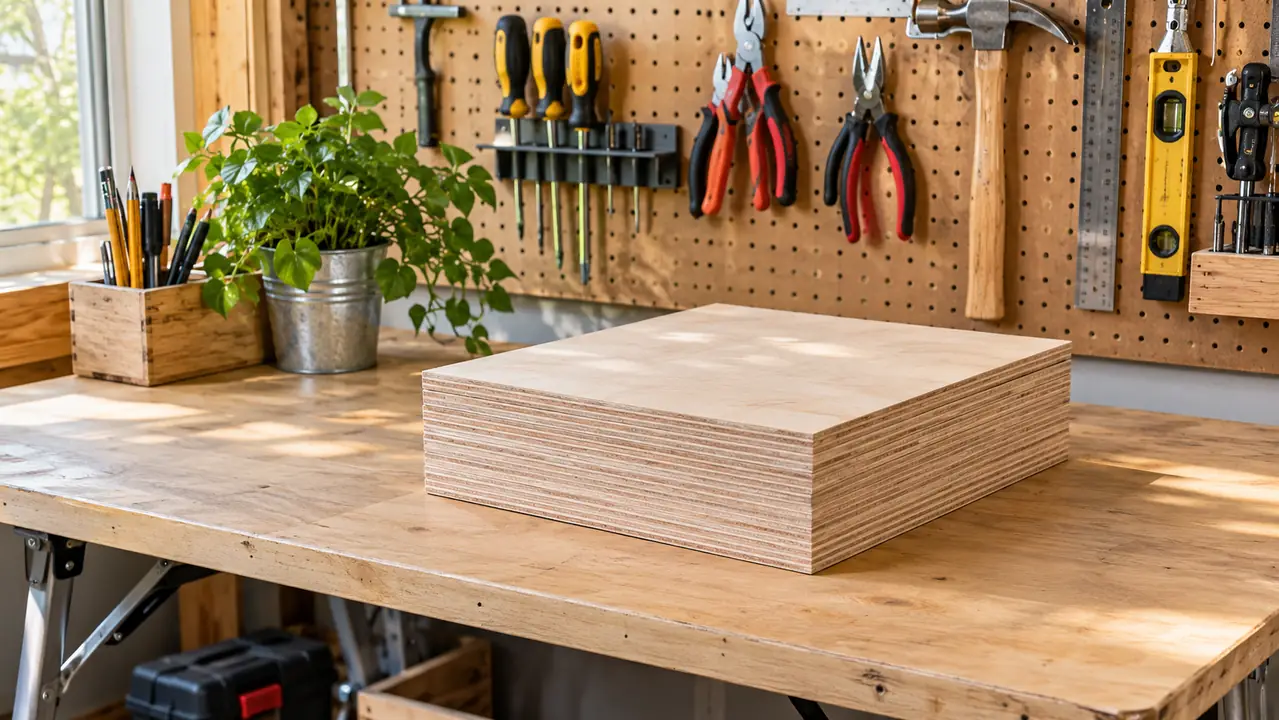
The VKIZA sheets are 12 by 12 inches and 0.13 inches thick, the 1/8 inch size most ornament makers use. The pack holds 30 sheets and weighs 2.3 kg total, so the whole stack fits on one shelf. The Baltic Birch I compared against was the same 1/8 inch thickness, bought in a small pack from a specialty supplier. That keeps it a fair fight. Thicker birch is a different animal, and comparing 1/8 inch to 1/8 inch is the only honest way to do this.
Where VKIZA Wins
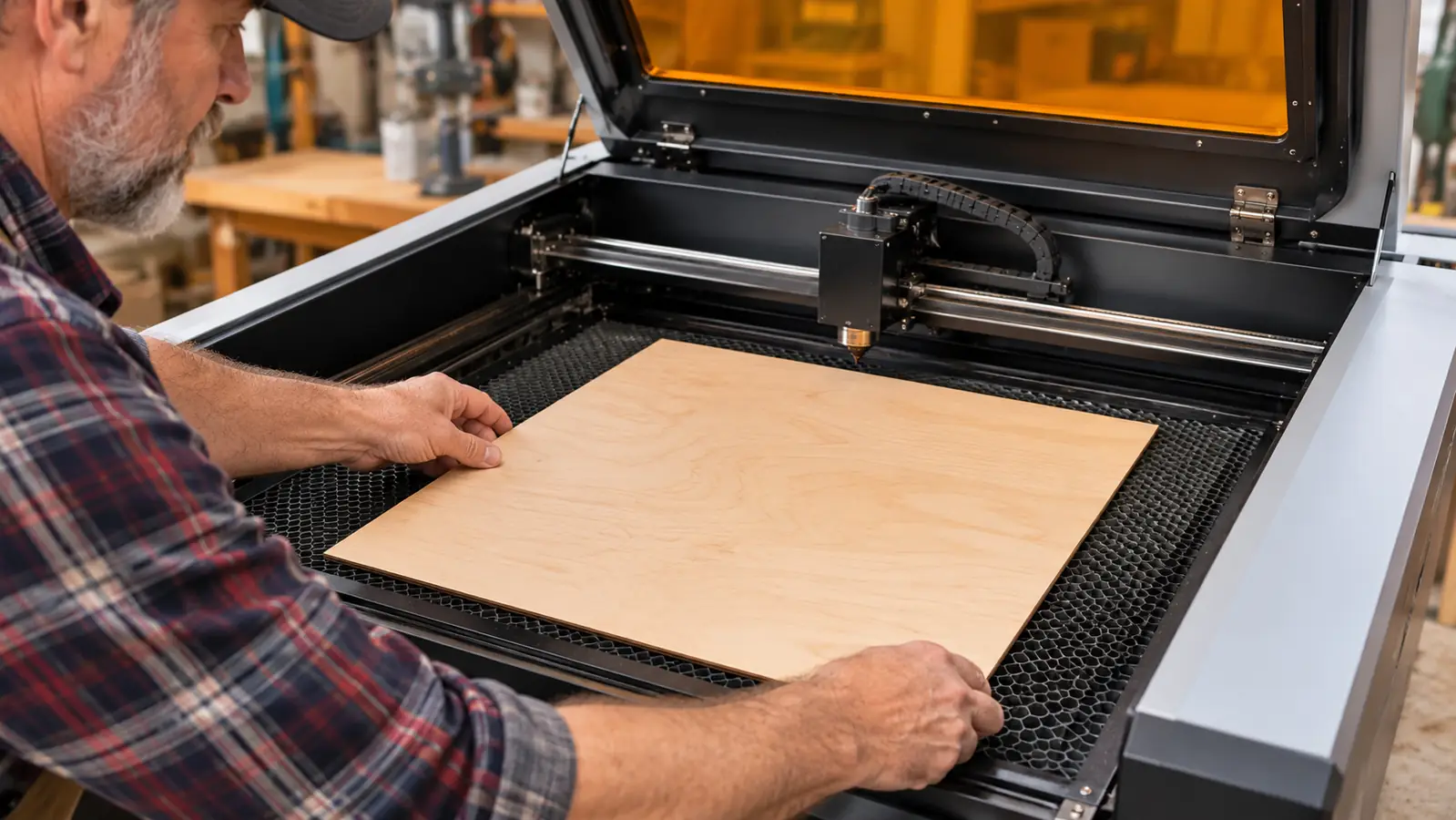
The biggest reason I keep a stack of VKIZA basswood sheets on my shelf is how easy they are to cut. Basswood is a soft, light wood, and the laser barely has to work to get through it. On my machine I run it at noticeably lower power than birch, which means faster passes and less wear on the tube. For a run of twenty ornaments the week before a craft fair, that speed adds up. The listing calls it strong machinability, and that is not marketing talk. It cuts, it engraves, and it does not argue with you.
The other win is the pack itself. Thirty sheets, all 12 by 12 inches and 1/8 inch thick, flat and consistent, for less than a handful of specialty birch sheets would cost. I don't have to plan a project around one precious piece of plywood. I can test a setting on one sheet, decide it's wrong, and still have 29 left. The surface is smooth and even, so engraved lettering comes out clean, and the wood takes paint well, which is how most of my wreath cutouts end up finished. If a sheet gets scratched in storage, I don't mourn it. I grab another one.
Where Baltic Birch Wins
Baltic Birch is the stronger wood, and it's not close. The plies are thin and tight, with no voids in the core, so a cut edge looks like a solid piece of wood instead of a sandwich. That matters when the edge is part of the design, like a box or a shelf where you see the ply layers. Basswood ply is softer, and on fine detail the face can fuzz or dent where a clamp touches it. Birch shrugs off that kind of handling and still looks crisp.
Birch also wins on anything structural. If the piece has to hold a screw, carry a little weight, or survive a trip through the mail, birch is the safer choice. The VKIZA sheets are rigid enough for ornaments and signs that hang flat on a wall, and I've made plenty of those. But the first time I made a small box with finger joints, I switched to birch and never looked back. The joints came out crisp, the corners stayed square, and the finished piece felt solid in a way basswood doesn't quite match. Birch is also the most warp-resistant plywood I've used, which matters in a garage workshop that sits through humid Tennessee summers. I've also learned to keep a few birch sheets around for gifts I mail to my daughter Josie in Asheville, because they survive the trip without a dent.
Start With a 30-Sheet Stack and Learn What Basswood Does Best
If you're making ornaments, wreath cutouts or small signs, the VKIZA 30-pack gives you room to practice settings, test designs and still have sheets left for the real run. It's the low-pressure way to find out whether basswood suits the way you work.
Amazon Check Today's Price on Amazon →Who Should Buy Which
Buy the VKIZA basswood sheets if you make ornaments, wreath cutouts, small signs, or anything that hangs flat and doesn't carry a load. Buy them if you're still learning your laser settings and want a forgiving material to practice on, because a wasted sheet costs you almost nothing. Buy them if you finish your pieces with paint, since basswood takes paint evenly and the smooth face makes engraved lettering pop. This is the material I recommend to people just starting out, and it's the material I keep on hand for the bulk of my own work.
Buy Baltic Birch if your project has joints, moving parts, or any chance it will be handled roughly. Buy it for boxes, shelves, toys, and anything with an exposed ply edge that's part of the look. Buy it if you're making something that has to stay flat and true in a humid room. It costs more per sheet, but for those jobs it's the cheaper choice, because the first one works and you don't redo it. I keep a small stash of birch for exactly those projects, and it lasts me all year.
And if you're still on the fence, here's a practical test. Cut one ornament from each material, finish them the way you normally would, and hang both on your wall for a week. Whichever one you're happier to see every day is the one you should be buying. That test has settled every material argument I've ever had, including this one.
What the Spec Sheet Gets Right
The VKIZA listing is short, and most of it is accurate. It says the sheets have clear texture, a flat smooth surface, and good durability, rigidity and stability. In my experience that's true for a softwood ply. The face is smooth enough for engraving, the sheets stay flat if you store them flat, and they're rigid enough for anything that hangs on a wall. It also says the wood is 100 percent environmentally friendly, which I can't verify beyond the listing, but I can say I've never had a sheet with an unpleasant smell or oily residue. The 2.3 kg total weight means I can carry the whole pack from the car to the workshop in one trip, which matters more than you'd think.
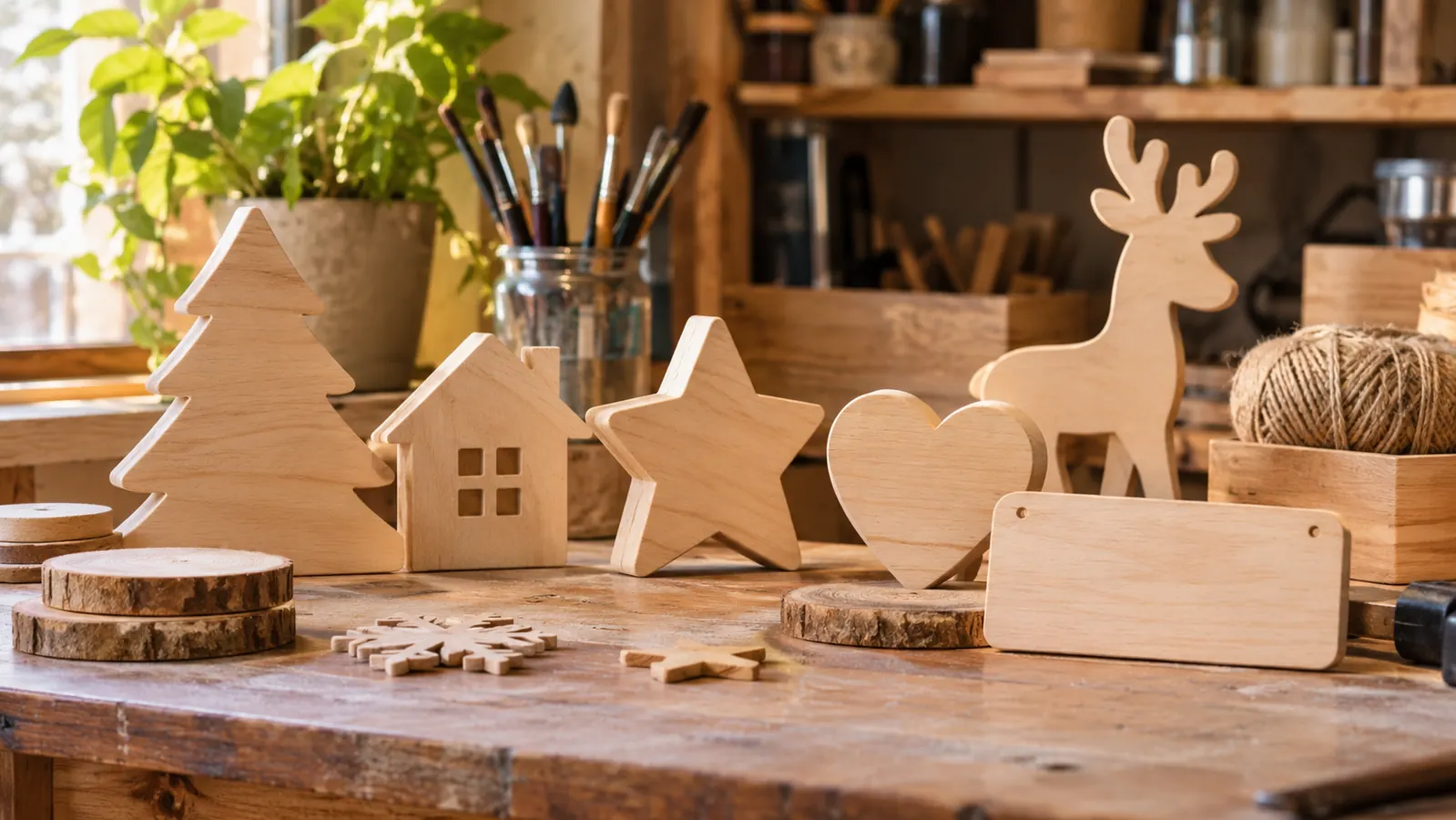
The one thing the spec sheet can't tell you is how the sheets behave in a real workshop. The listing says they're good for delicate models and gifts, and that's the honest use case. I've made ornaments, small signs, wreath cutouts and a few little houses for my daughter Josie's holiday table, and they all cut clean. The 0.13 inch thickness is thin enough for fine detail but thick enough that a finished ornament doesn't feel flimsy in your hand. That's the sweet spot for this kind of work.
A Few Practical Notes From My Workshop
Store the sheets flat. I keep my stack on a shelf under the folding work table, with a piece of scrap cardboard on top to keep dust off. Basswood is soft, so the face dents if you drop a tool on it, and a dented face shows up in an engraving. If you're cutting a big batch, cut the test piece first, check your settings, then run the rest. The sheets are consistent enough that the first one tells you what the next twenty will do.
On finishing: paint and stain both work, but paint is where basswood shines. The smooth face takes an even coat, and acrylic craft paint covers well without soaking in unevenly. If you engrave lettering and then paint the whole piece, the engraved lines hold the paint and stand out nicely. I finish most of my wreath cutouts with a couple of coats of matte sealer after painting. For birch, I usually leave the wood bare or use a clear finish, because the ply edge is part of the look. Different materials, different habits.
What I'd Tell a New Crafter
If you're just getting started with a laser, buy the VKIZA basswood pack first. Not because it's the best wood, but because it's the best wood to learn on. You will make mistakes. You will cut a design upside down, forget to change a setting, and burn a sheet past saving. With a 30-pack, those mistakes cost you almost nothing and you can keep going the same afternoon. Learning on expensive birch means every mistake stings, and a sting makes you cautious. Caution is the enemy of practice.
Once you've made a dozen ornaments and you know what your machine does, buy a small pack of birch and try a box. That one project will teach you more about why birch costs more than any review can. You'll feel the difference in the joints, in the edge, in how the piece holds up. And then you'll know, from your own hands, which material to reach for next time. That's the whole point of this comparison. It's not about which wood is better. It's about which wood is better for the thing you're making.
The Bottom Line
If I had to keep only one material on the shelf, it would be birch. But if I had to pick one material for the kind of work I actually do, which is painted ornaments and wreath cutouts given away at craft fairs, it's the VKIZA basswood. The honest answer is that most hobby crafters should start with basswood, learn on it, and buy birch when a specific project demands it. That's not a compromise. It's using the right tool for the job, and knowing the difference is what saves you the wasted weekends.
The 30-Pack That Keeps Up With a Weekend of Cutting
For ornaments, wreath cutouts and signs, the VKIZA basswood 30-pack is the stack I keep on my shelf. Flat, smooth, consistent sheets that cut clean and take paint well. Check today's price and see if it fits your project list.
Amazon Check Today's Price on Amazon →